

Fountain Pen Nib Sizes Explained: Extra Fine to Italic
From Extra Fine to a 1.5mm Italic, what each fountain pen nib size writes like, typical line widths, and why Medium is the one we recommend for most people.

At a glance
- Fountain pen nibs run from Extra Fine through Fine, Medium and Bold to Extra Bold, with the line getting wider at each step.
- Medium is the one we recommend for most people: it flows more freely, glides with less feedback and shows off the ink.
- Go finer only for very small handwriting or thin paper; go Bold, Extra Bold or Italic for signatures, cards and larger handwriting.
- Every Wingback Fountain Pen comes in all six sizes; if you are unsure, choose Medium.
Fountain pen nib sizes describe how wide a line the nib puts on the page. They run from Extra Fine, the thinnest, through Fine, Medium and Bold to Extra Bold, with the Italic sitting to one side as a nib shaped for character rather than width. If you are not sure which to choose, choose Medium: it flows more freely than the finer sizes and suits most handwriting.
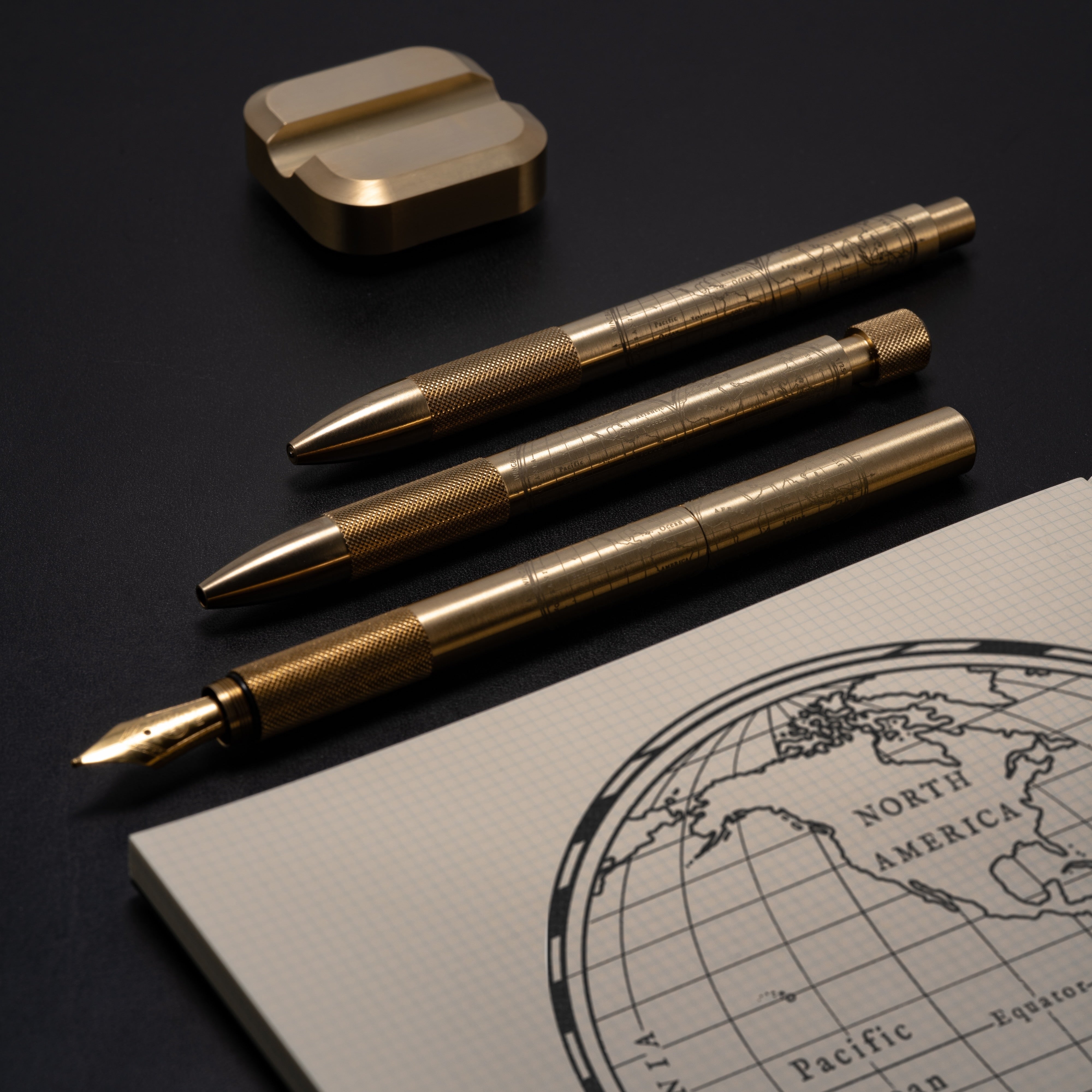
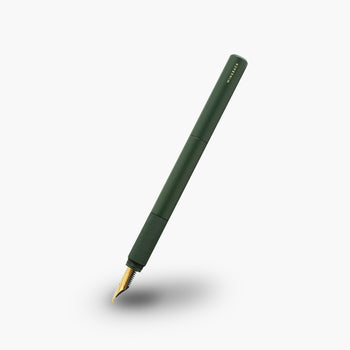
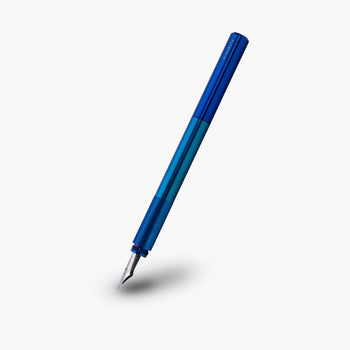
Every Wingback Fountain Pen takes a Bock Ø76 Mono iridium-tipped nib, and each finish is offered in six sizes: Extra Fine, Fine, Medium, Bold, Extra Bold and a 1.5mm Italic Point. Medium is the size we recommend for most people, and with Fine it is one of the two our customers choose most.
What do the nib sizes actually mean?

Each size stands for the width of line the nib writes, and the step between neighbouring sizes is small. The widths below are typical for European nibs and are a guide rather than a measurement, because the same nib writes a little wider with a wet ink or soft paper, and a little finer with a drier ink on smooth, coated paper.
| Nib size | Typical line width | Best for |
|---|---|---|
| Extra Fine (EF) | about 0.3 to 0.4mm | Small handwriting, diaries, pocket notebooks, thin paper |
| Fine (F) | about 0.4 to 0.5mm | Everyday notes and neat, compact writing |
| Medium (M) | about 0.6 to 0.7mm | Our recommendation for most people: everyday notes, letters and journals |
| Bold (B) | about 0.8 to 1.0mm | Larger handwriting, signatures, showing off an ink |
| Extra Bold (EB) | about 1.0 to 1.2mm | Cards, headings and signatures with presence |
| 1.5mm Italic | broad down-strokes, fine cross-strokes | Handwriting with a calligraphic look |
Nib sizes are not standardised between makers, either. Japanese nibs tend to run about a size finer than European ones, so if you are used to a Japanese Fine, our Extra Fine will feel closer to what you know.
Fine vs Medium: which nib size should I get?

For most people, Medium. Its slightly wider tip lays down a steady flow of ink and glides across the page with less of the scratchy feedback a finer nib can have, and it is more forgiving of the angle you hold the pen at. It also shows more of the ink's colour and shading, which is a large part of the pleasure of writing with a fountain pen in the first place.
A Fine nib has its place. It keeps very small letters crisp and separate, copes better with thin or absorbent paper, and dries a little faster because it lays down less ink.
So start from Medium, and only go finer if your handwriting is very small or you mostly write in a pocket notebook on thin paper.
Best nib size for small handwriting
If your handwriting is very small, go finer. An Extra Fine or Fine nib stops the loops of small letters filling in, so a page of notes stays readable when you come back to it weeks later. A finer line also feathers less on absorbent paper, which helps in cheaper notebooks and on the backs of envelopes.
Best nib size for left-handed writers
Left-handed writers vary so much in how they hold a pen that there is no single right answer, but a Fine or Extra Fine is usually the easier choice. Less ink on the page means less to smudge as your hand moves across what you have just written, and a quick-drying ink helps further. Each pen comes with an international standard cartridge, and our Diamine ink cartridges, from a Liverpool ink maker that has been at it since 1864, make for an easy refill.
A note on paper
The broader the nib, the more ink it puts down, and the more thin or cheap paper will show it as feathering or bleed-through. If you choose a Bold, Extra Bold or Italic, a notebook with heavier, smoother paper will show the line at its best.
When should I choose a Bold, Extra Bold or Italic nib?

Bold and Extra Bold nibs are for writing you want to be seen: signatures, cards, headings, and larger handwriting that would look cramped with a finer line. They are also the sizes that show an ink best, because there is enough of it on the page for shading to appear as it dries.
The 1.5mm Italic Point is a different kind of nib. Its tip is ground flat and wide rather than round, so down-strokes come out broad and cross-strokes fine, and ordinary handwriting picks up the contrast of calligraphy without any special technique. It does ask you to keep the nib square to the paper and write at a steadier pace, so it suits correspondence, journals and cards better than hurried notes.
If in doubt, choose Medium. Go finer for very small handwriting, broader for signatures and show.
How does a fountain pen nib work?
For centuries people wrote with quills and then steel dip pens, stopping every few words to reload from an inkwell, and by the middle of the nineteenth century Birmingham was the centre of the world's steel nib trade. Carrying the ink inside the pen was the harder problem, because early fountain pens tended to blot or run dry. The answer, patented by Lewis Waterman in 1884, was a feed with fine channels that let air into the pen as ink flowed out, so the ink arrived at a steady rate. Fountain pens have worked on the same principle ever since, ours included, and our pens are still machined in Birmingham.
Ink is drawn from the cartridge along the feed, the ridged piece that sits beneath the nib, by capillary action, and air travels back up the feed to take its place. The nib is split down the middle into two tines, with a small breather hole at the top of the slit, and the ink runs down that slit to the tip. The tip is a small bead of hard-wearing metal at the end of the nib (ours are iridium-tipped), ground smooth so it glides across the paper. Its size and shape are what a nib size describes: a larger tip puts more ink in contact with the paper, which is why a Medium writes more smoothly than a Fine, and an Italic is a tip ground flat and wide rather than round.
Does the pen itself change the decision?

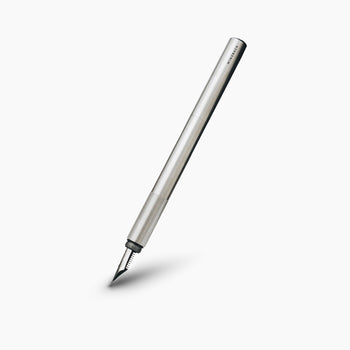
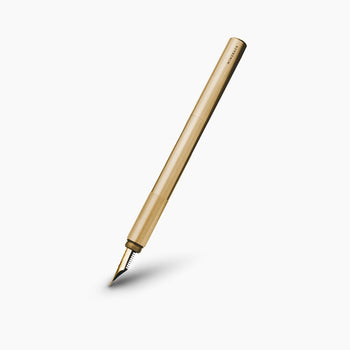
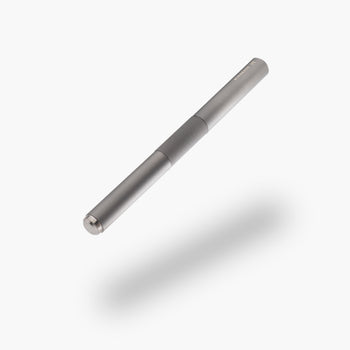
The nib does the writing, but the weight of the pen shapes how it feels. The Titanium Fountain Pen weighs 23g and asks very little of your hand over a long session, while the steel and brass pens, at 39g and 41g, sit more firmly in the hand and let the nib glide under their own weight. Finish is a matter of taste too, and with brass especially, the patina it develops over time becomes part of the appeal. If you are still choosing between pens, our guide to choosing between the Fountain, Journeyman and Mechanical pens is a good next read.
Whichever size you choose, each pen is machined in England, assembled in our London workshop and guaranteed for life.
The Wingback Team










Leave a comment