

What is a refillable notebook?
A refillable notebook keeps the part worth keeping (a full-grain leather cover made to last) and treats the paper as the only disposable part. Here's how it works and why it's the smarter buy.

At a glance
- A refillable notebook is a leather cover you keep for life and refill with fresh paper inserts as you fill them up.
- The Wingback cover is full-grain vegetable-tanned Tuscan leather, handmade in England and backed by a lifetime guarantee.
- It comes in two sizes: Medium (fits any 11.5 x 18cm notebook, including Moleskine Medium hardcover) and Pocket (A6, Moleskine Pocket softcover).
- Only the paper is disposable, so you buy one cover once and replace the inexpensive insert whenever it runs out.
A refillable notebook is a cover you keep and a paper insert you replace. Rather than buying a whole new notebook every time you fill one, you slot a fresh insert into the same cover and carry on. It's a small change in how you think about a notebook, and it makes the leather part of the equation something you buy once and keep for years.
That's the heart of the idea, and it's worth understanding properly before you choose one, because not every "reusable notebook" works the same way. Some rely on erasable pages you wipe clean; ours keeps the thing worth keeping (the cover) and treats the paper as the only part that's ever disposable.
How does a refillable notebook system actually work?

The Medium Refillable Notebook is a full-grain leather cover built to hold a standard paper insert. When you reach the last page, you take the finished notebook out, drop a new one in and keep the cover. Nothing is thrown away except the paper you've already used.
The cover itself is cut, hand-stitched, bevelled and burnished in England from vegetable-tanned leather sourced in Tuscany. It measures 142mm x 215mm x 22mm and is designed to fit any 11.5 x 18cm notebook, which includes the Moleskine Medium hardcover. If you prefer something smaller for a jacket pocket, the Pocket size takes an A6 or Moleskine Pocket softcover insert and works exactly the same way. If you want to understand why that full grain matters, our leather buying guide walks through how to choose a hide that ages well.
What can you refill it with?

One of the better parts of a notebook with replaceable pages is that you're not locked into a single refill. A few options that fit the Medium cover:
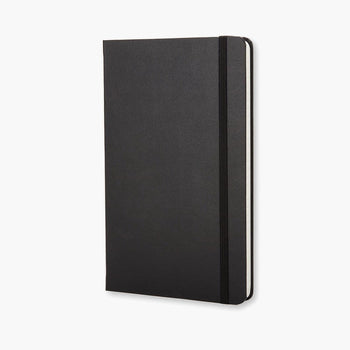
- Moleskine Classic Hardcover Medium — 240 ivory, acid-free pages on FSC-certified paper, available lined, dotted or squared.
- A5 Karst Stone Paper Notebook — 144 waterproof, tear-resistant pages made from calcium carbonate recycled from construction and mining waste, printed with soy ink.
The Pocket cover pairs neatly with a Moleskine Pocket softcover or a slimmer field-notes style insert, so you can match the paper to how you actually write. Fountain pen users tend to gravitate towards smoother stock; if you sketch or take rough notes on the move, the more rugged stone paper earns its place.
Why choose refillable over disposable?
The case is simple once you see where the value sits. A disposable notebook puts most of its cost and character into a cover you bin the moment the pages run out. A refillable one flips that. You invest once in a cover made to last, then spend very little topping up the paper.
The cover outlives every notebook it will ever carry, and only gets better as it does.
There's a look-and-feel argument too, which matters more than people admit. Full-grain leather has a depth and a scent you don't get from a printed cardboard cover. It's firm and substantial in the hand at first, then softens with use and picks up the small marks of everyday carry. Those aren't wear; they're the beginnings of a patina that makes the cover unmistakably yours. A disposable notebook never gets the chance to age, because you throw it away before it can.

It also sits comfortably within a buy less, buy better approach. One well-made cover, refilled again and again, replaces a shelf of half-used notebooks over its lifetime.
Which size and colour should you pick?
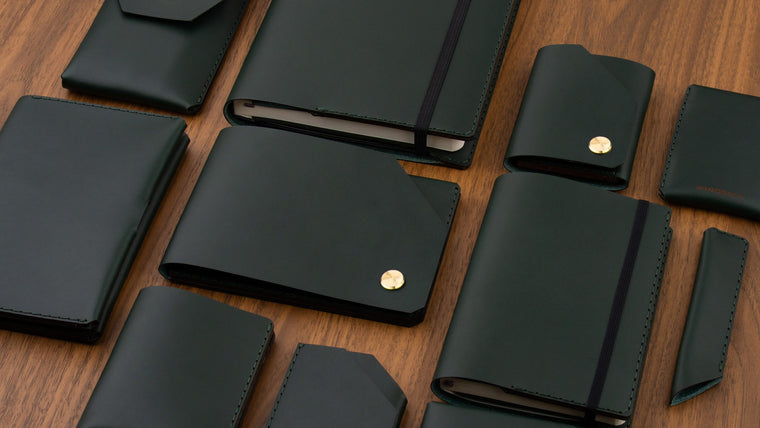
Size is the first decision. The Medium is the workhorse for desk notes, journalling and planning; the Pocket is for the notebook that lives on you. Both come in charcoal, chestnut, whisky and British racing green, and the Pocket also comes in a World Explorer edition.
Colour is largely down to taste, though it's worth knowing how the leather behaves. Lighter shades like whisky show engraving more boldly and develop a warmer patina over time; darker tones like charcoal and racing green keep any inscription subtle and hide day-to-day marks a little more. There's no wrong answer here, only the one you'll enjoy carrying.
A note on personalisation
You can add an exterior inscription of up to 20 characters and an interior message of up to 250. For a bolder engraving, choose a lighter leather; the darker the colour, the more understated the mark.

Looking after the cover
Vegetable-tanned leather asks very little of you. Keep it away from prolonged damp, wipe off anything it picks up, and let it soften naturally with handling. If it ever looks thirsty, the same approach we use on our wallets applies, and you can follow our guide on how to care for and re-oil leather. Treated kindly, the cover is covered by our lifetime guarantee and will see out a great many refills.
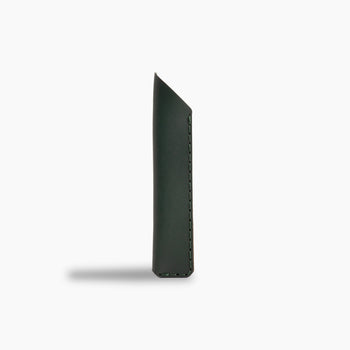
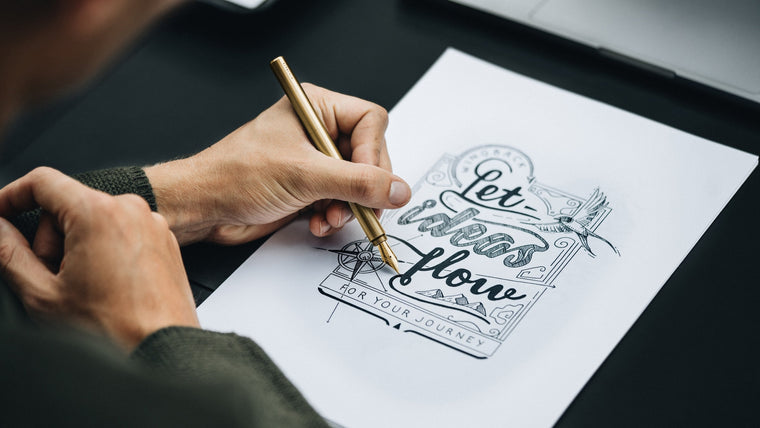
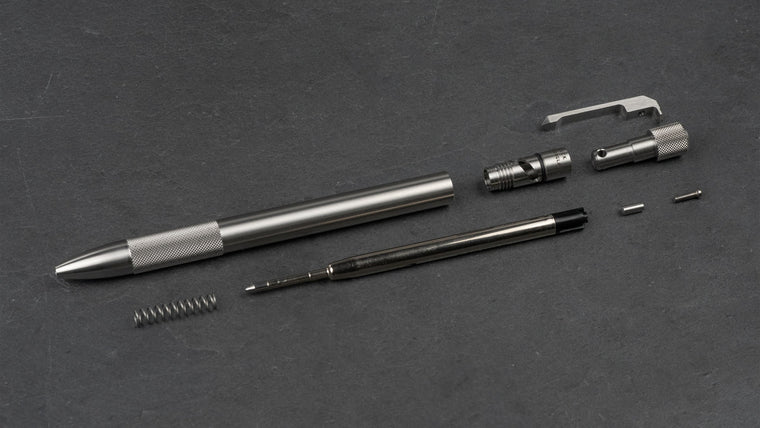
Pair it with a good pen and the set becomes something you reach for without thinking. If you're weighing up which to carry, our guide to choosing a Wingback pen, and a leather pen sleeve to protect it, round things out nicely.
The Wingback Team










Leave a comment